Going to the 2023 APS March Meeting? Submit an abstract to the FECS Postdoctoral Poster Prize Competition in addition to your normal contributed or invited abstract. Up to a $500 prize for best poster!
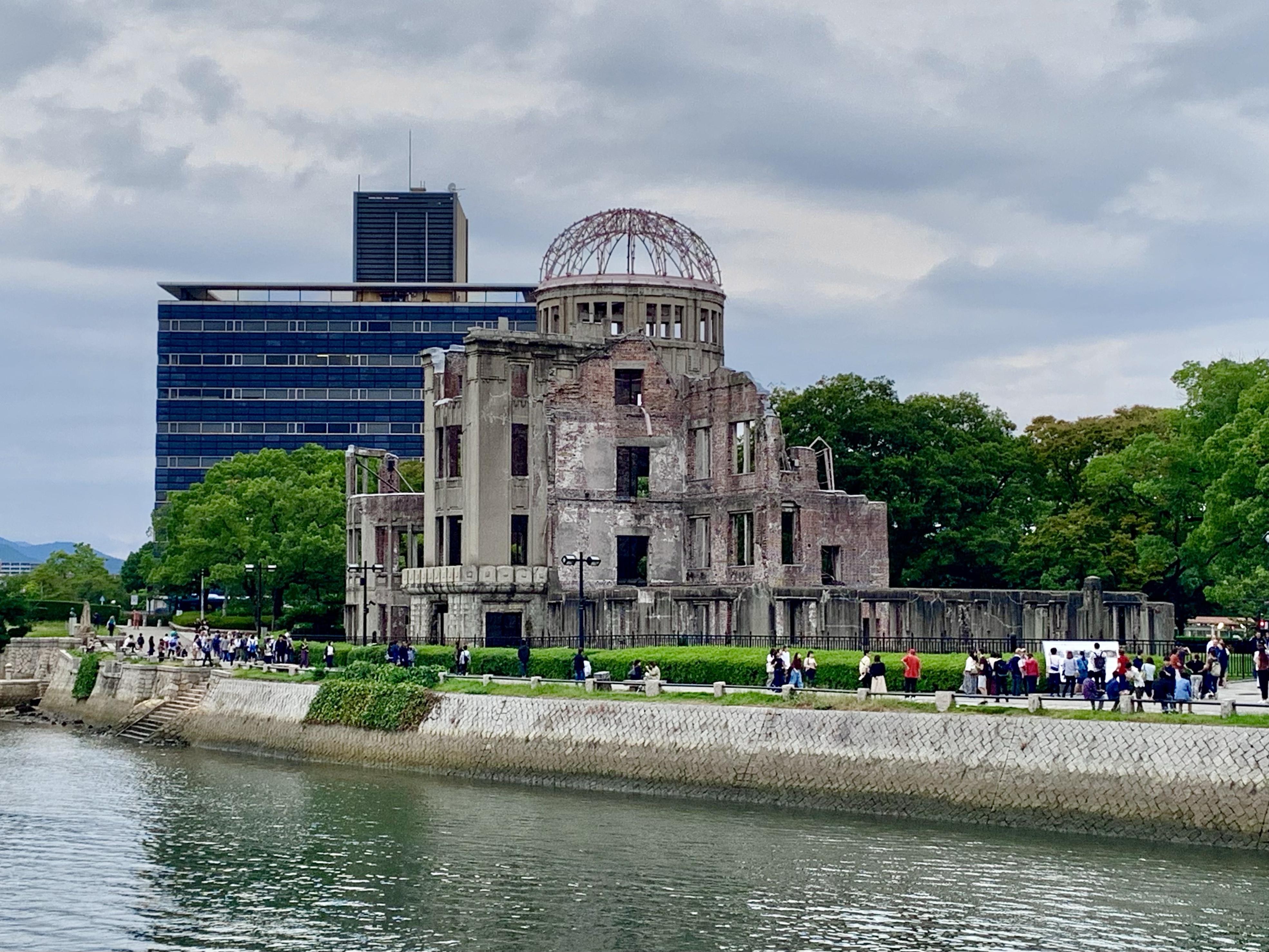
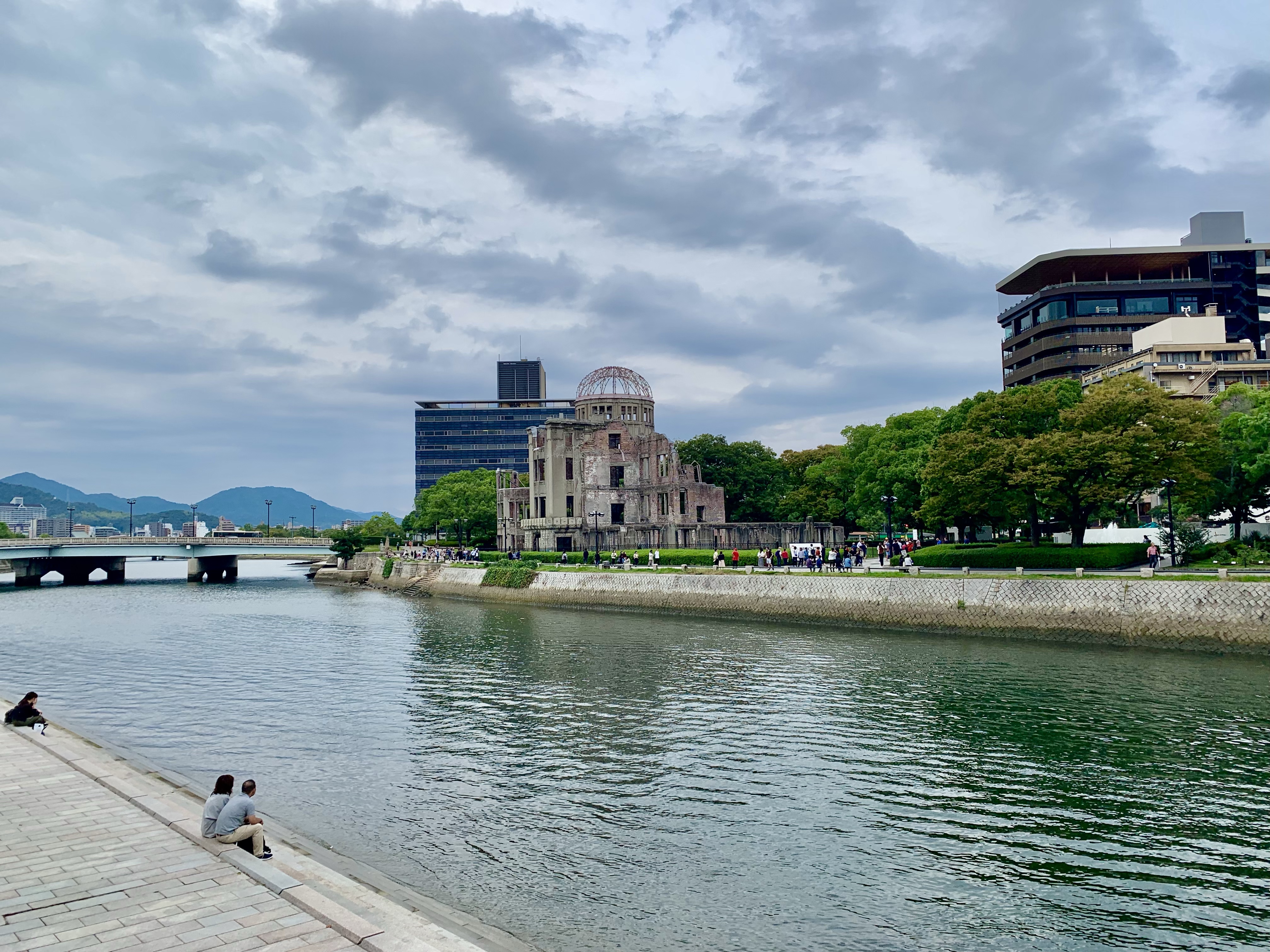
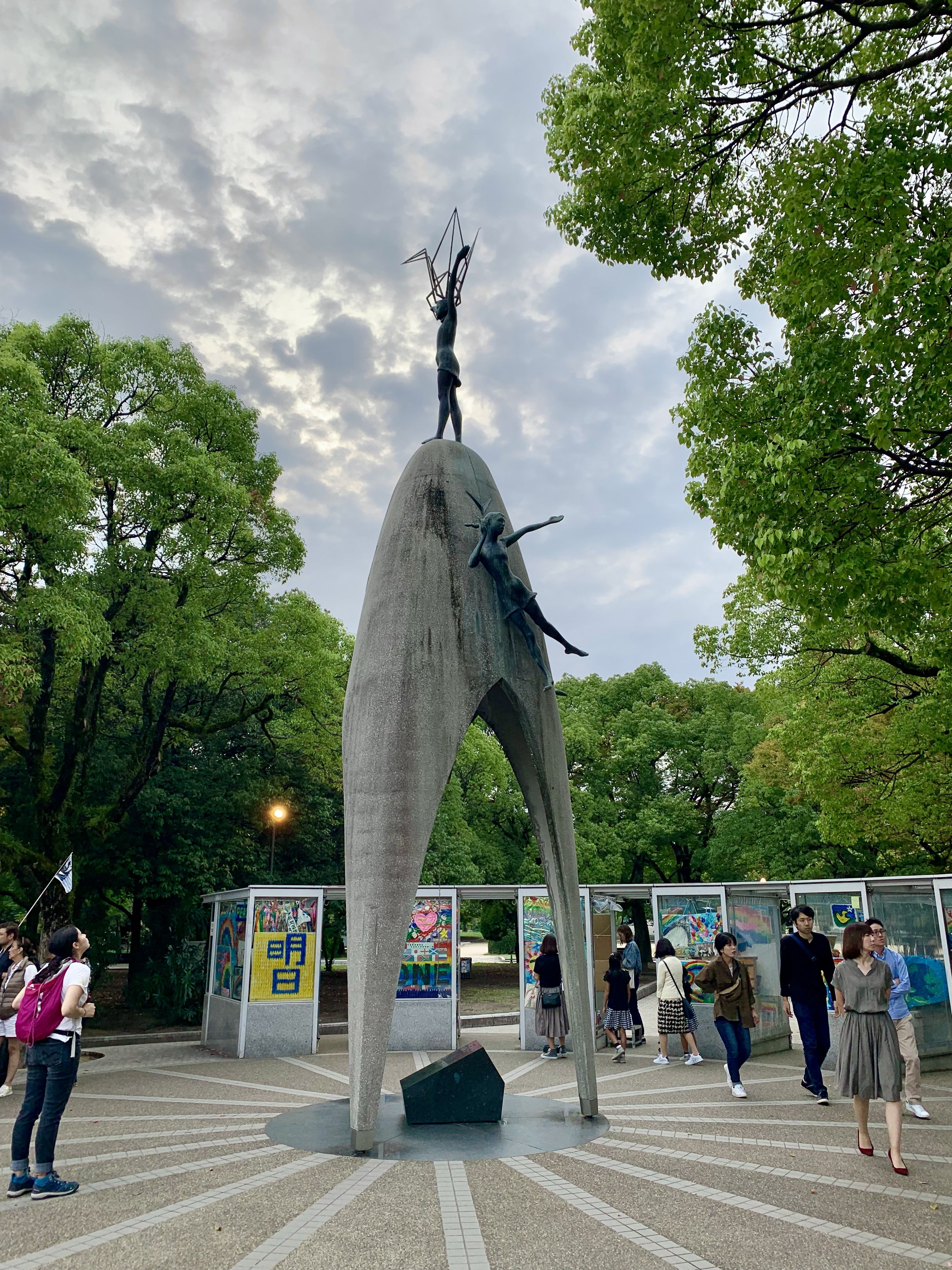
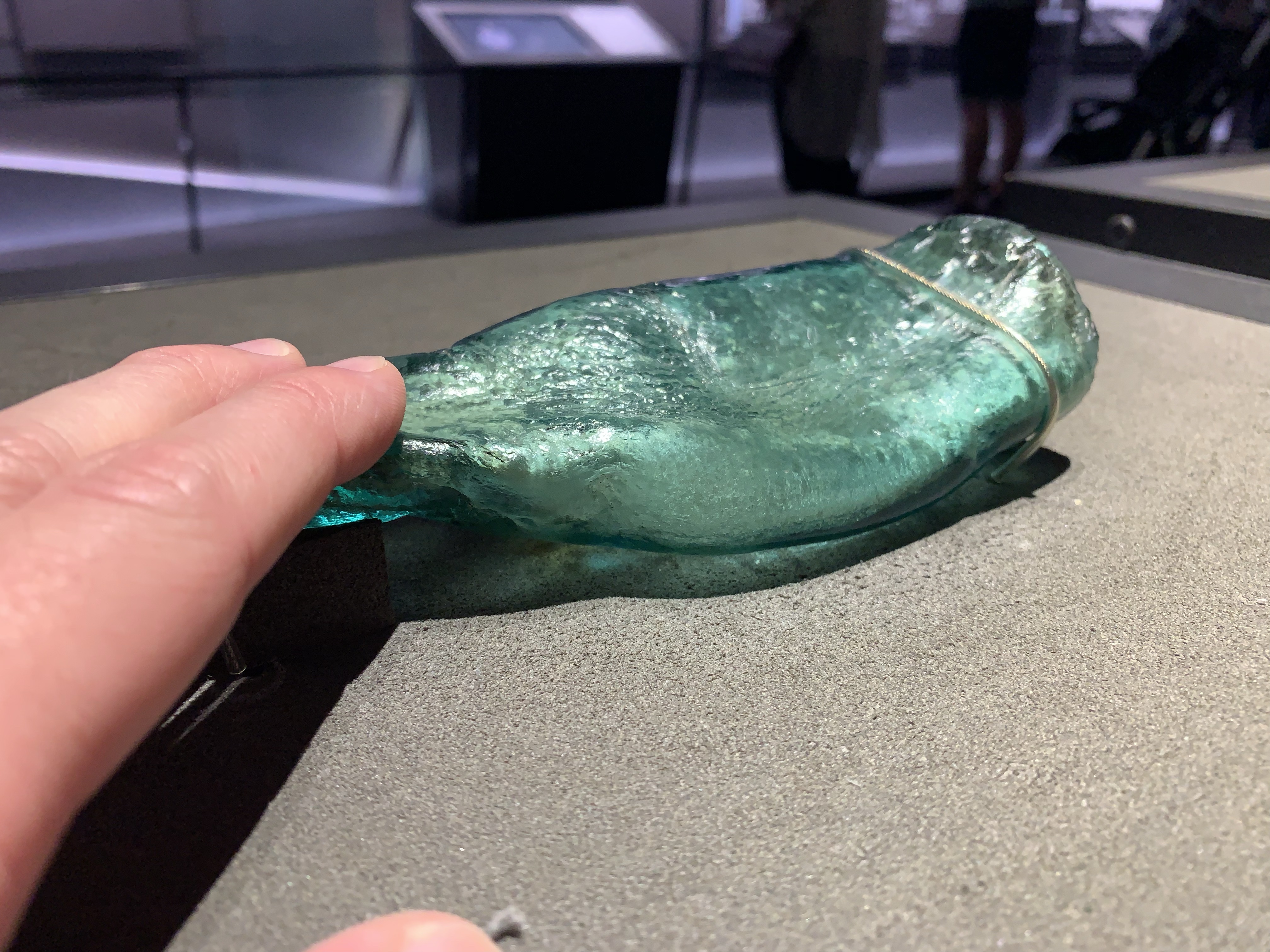
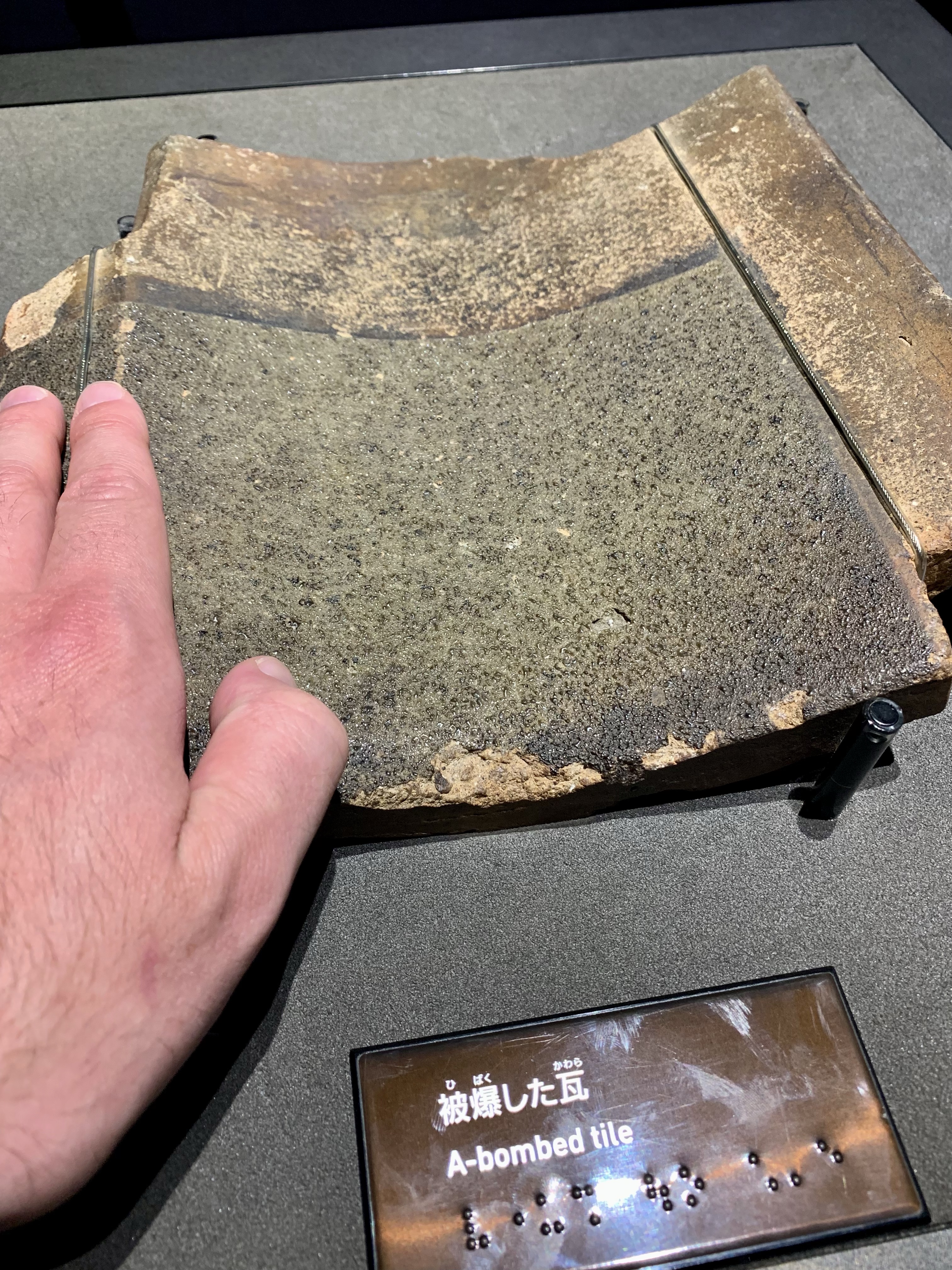
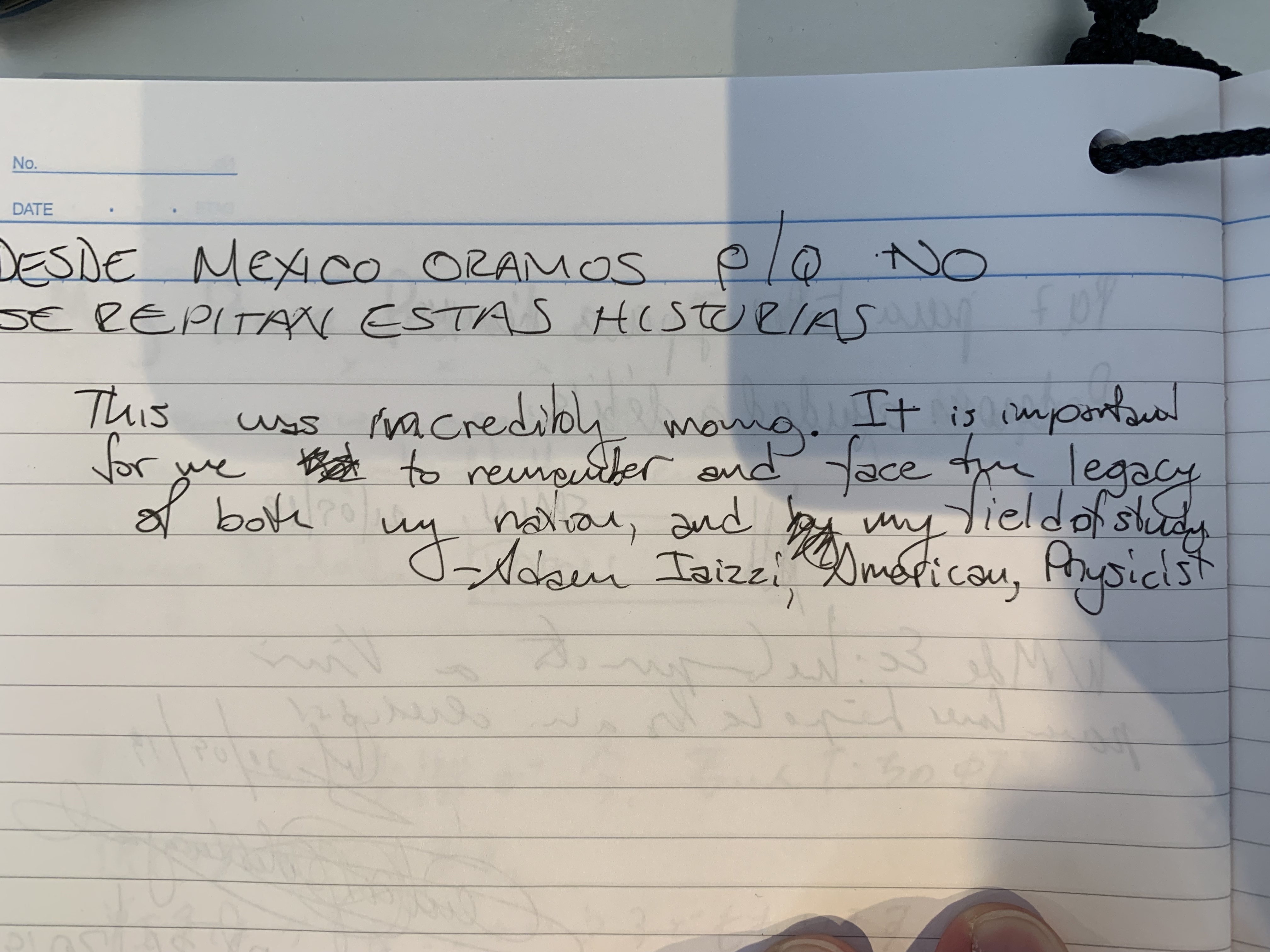
The atomic domeThe atomic domePeace ParkBottle melted by atomic blastRoof tile partially melted by atomic blastGuest book
Today–August 6, 2022–marks the 77th anniversary of the atomic bombing of Hiroshima, Japan. In an instant, a single bomb killed or fatally wounded at least 90,000 people and marked the beginning of the nuclear era.
In 2019, I had the privilege of visiting the beautiful city of Hiroshima and the profoundly moving museum and memorial there. It is a powerful reminder of the responsibility that we all share to ensure these weapons are never used again.
The survivors of the attack, known in Japanese as Hibakusha (atomic bomb affected people), dedicated their lives to telling the world about the horrors they endured in order to rid the world of these terrible weapons. Nuclear weapons are going nowhere soon, but I am deeply grateful to the Hibakusha. World War II was the first and, thanks to their efforts, only nuclear war.
We’re super excited for the 2022 March Meeting and we at FECS have prepared a program of some excellent events focusing on the unique interests of early career scientists. Also keep an eye out for our table somewhere in the hallways. I hope to see you there!
Update 2021-07-13: All adult residents of Taiwan now eligible to sign up to the vaccine waitlist. You’ll get a text when you can make an appointment. Update 2021-07-06: Free PCR tests now available in Taipei (previously ~$270 USD) [Focus Taiwan].
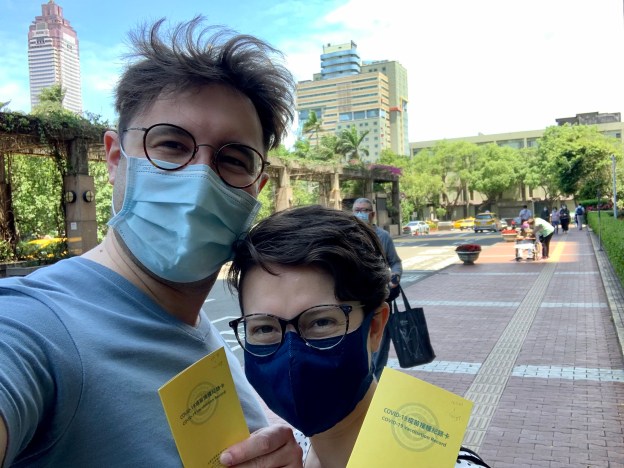
Today (Monday July 5, 2021), I got my second shot of the AstraZeneca vaccine at NTUH. If you got your first shot through the “self paid” vaccination program, you should be eligible to make an appointment for your second shot.
Update 2021-07-05 — Actually got my second shot. Details in new post. Update 2021-06-21 — I got a second notice from NTUH. I think online appointments will open 6/23. Details at the end.
As promised, I’m writing to update you all on the progress of getting a self-paid vaccine in Taiwan (see my earlier post). I received a text message from NTU Hospital telling me not to come to my second shot appointment scheduled for Monday (6/21), and that the second shots for self-paid vaccines will be given at an interval of 10-12 weeks instead of 8 weeks. Details below the break.
This morning I got my first shot of the AstraZeneca COVID-19 vaccine. I got a lot of questions about how to access the vaccine here in Taiwan, so I thought I would write a post about it .
This is off the usual theme of my blog posts, but I had this problem with my music library on my mac and I couldn’t find any solution online and Apple support didn’t quite know what to do either, so I wanted to document how I fixed it for others.
Tomorrow (Thursday 3/18) I’m giving my talk at the March Meeting!
R20.00005: Field-induced freezing in the unfrustrated Ising antiferromagnet Thursday, March 18, 9:12 AM–9:24 AM CDT View in bulletin Watch talk live
Abstract:
We study instantaneous quenches from infinite temperature to well below Tc in the two-dimensional (2D) square lattice Ising antiferromagnet in the presence of a longitudinal external magnetic field. Under single-spin-flip Metropolis algorithm Monte Carlo dynamics, this protocol produces a pair of metastable magnetization plateaus that prevent the system from reaching the equilibrium ground state except for some special values of the field. This occurs despite the absence of intrinsic disorder or frustration. We explain the plateaus in terms of local spin configurations that are stable under the dynamics. Although the details of the plateaus depend on the update scheme, the underlying principle governing the breakdown of ergodicity is quite general and provides a broader paradigm for understanding failures of ergodicity in Monte Carlo dynamics. See also: Iaizzi, Phys. Rev. E102 032112 (2020), doi:10.1103/PhysRevE.102.032112
*Note: The views expressed here are the speaker’s, and do not necessarily represent the positions or policies of the AAAS STPF Program, the US Dept. of Energy, or the US Government.
I just stumbled across these on the internet and they are both great. These are for Keynote (on macs) but there are probably equivalent settings on Powerpoint.
1. If you want to be able to switch apps while in presentation mode (e.g. to see the Zoom window). Look at this guide on the Zoom documentation. There is also a setting where you can make your cursor visible at all times so you can use it to point at things on your slides.
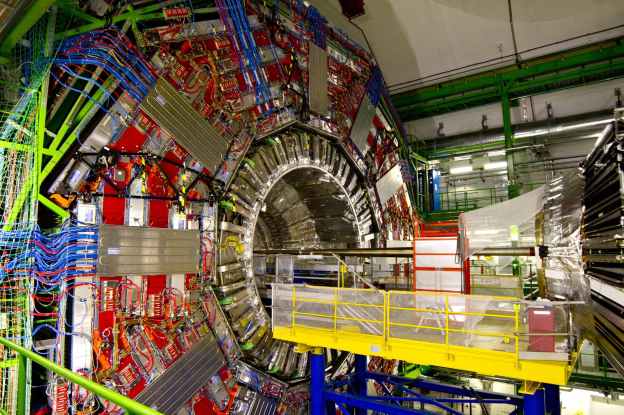
I am currently reading Beamtimes and Lifetimes, Sharon Traweek’s excellent anthropological study of the culture at particle physics laboratories in the 1970s when I stumbled upon a remarkable fact. The event rate of particle colliders has increased by a factor of 10 million between the 70s and 2016.
According to this 1976 SLAC report [1], the Large Aperture Solenoid Spectrometer (LASS) could record 100 events every second. That certainly sounds like a lot, but by contrast, by 2016 the LHC was producing 1 billion proton collisions per second [2]. That is 10 million times the rate as ~40 years ago (and at much higher energy) [3]. That is remarkable!
[1] P.F. Kunz, The LASS hardware processor, SLAC-PUB-1723 (March 1976) [2] S. Charley,LHC smashes old collision records, Symmetry Magazine (September 2016) [3] The caveat here is that these rates probably shouldn’t be compared apples-to-apples like this, since the LHC doesn’t record 1 billion events per second, and there are other complicated factors.




 Adam Iaizzi, PhD (易亞丹)