Outreach: The World in Your Classroom

Science is a powerful way of learning how our world works, but that knowledge is useless if ordinary people don’t trust scientists. This lack of trust is at the core of issues like climate change denial and the anti-vaccination movement. Scientific literacy is a huge and complex problem, but I think one cause of this mistrust is how few people know a scientist personally (in fact, one study found that only 4% of Americans could name a living scientist). People tend to trust people they know, so with that in mind I’ve decided to get more involved in science outreach.

I have now visited two local junior high school classrooms through The World in Your Classroom, a program that brings foreigners living in Taiwan into classrooms to meet with Taiwanese students and tell them about their home countries. I’ll describe one of those experiences now.
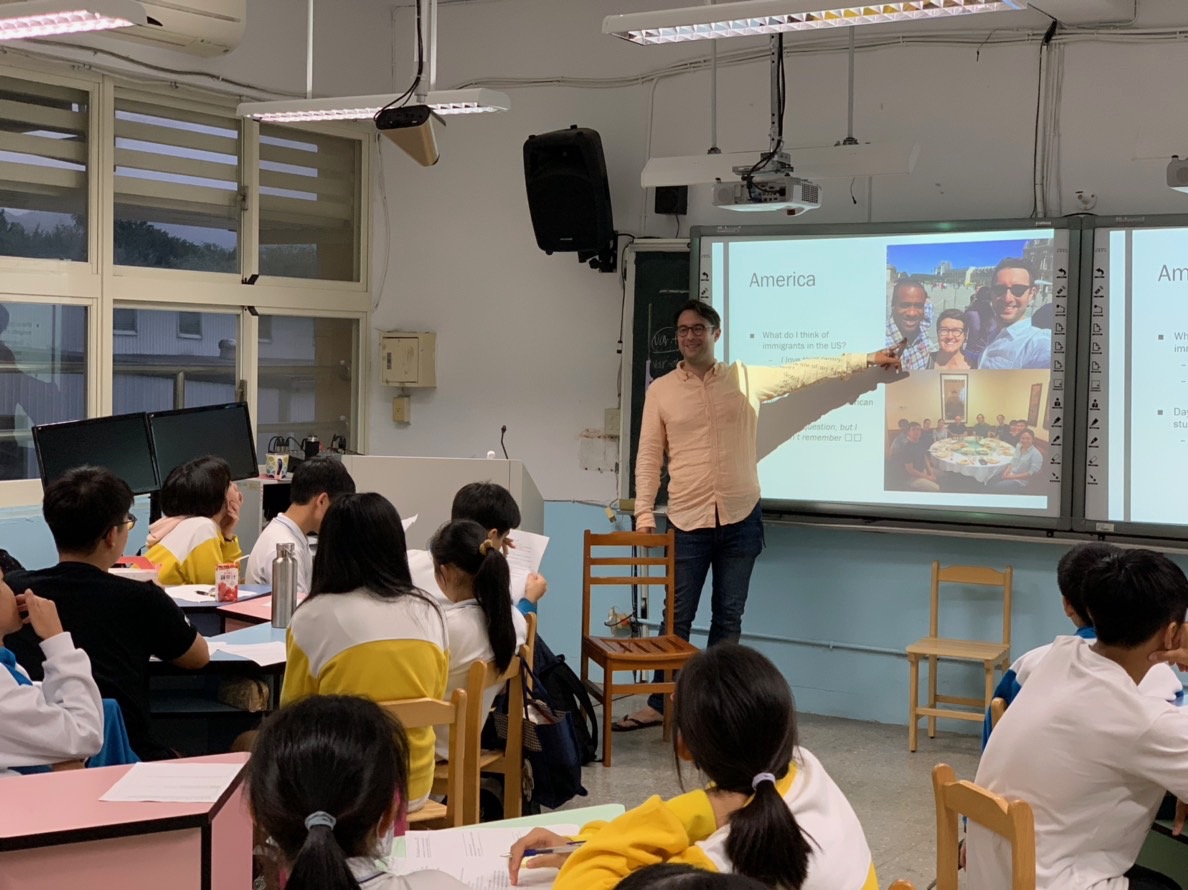
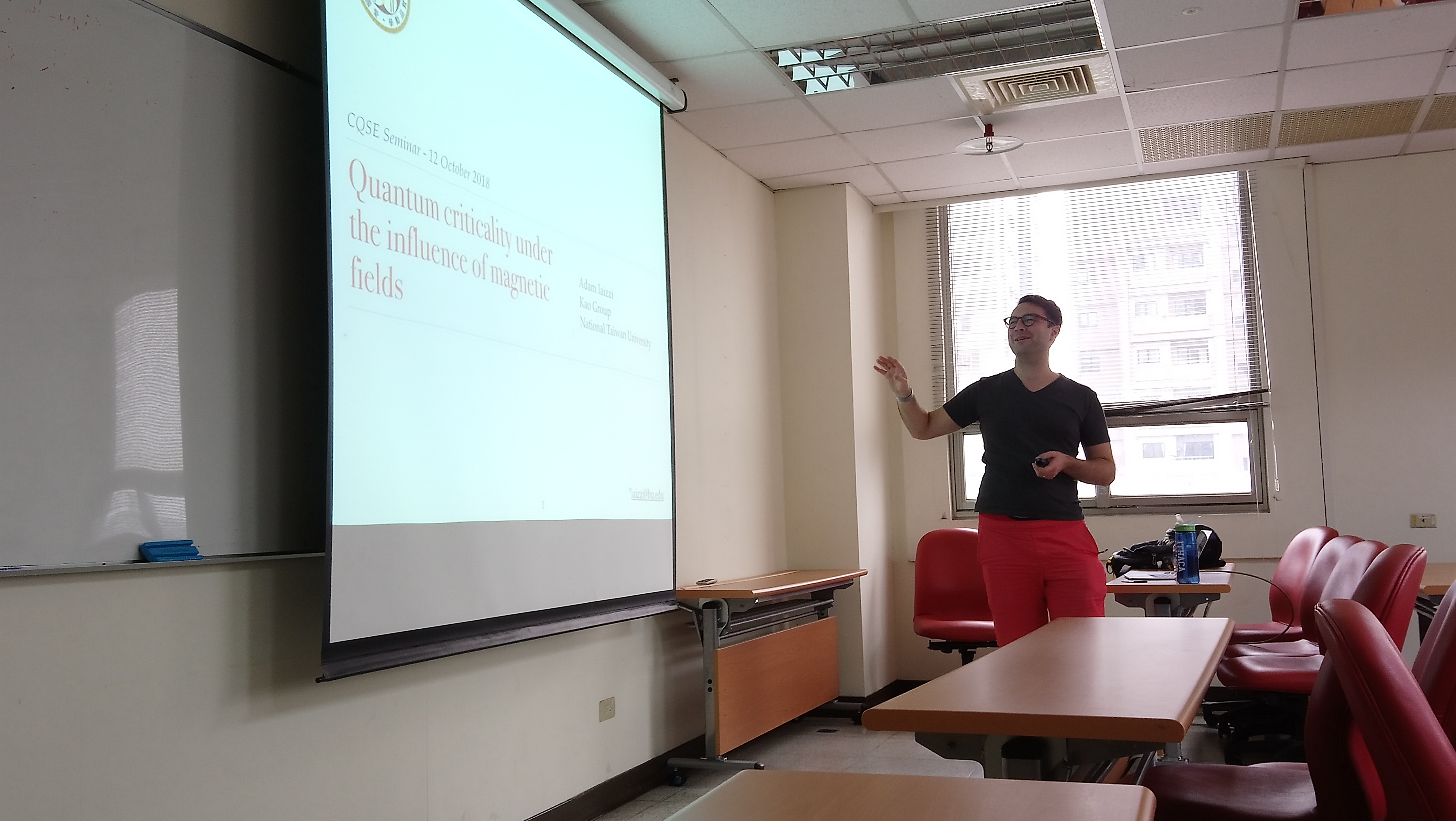
Photo of Adam presenting his slides in the middle school classroom.

For the first thirty minutes or so I showed the students some slides talking about where I grew up and how I ended up in Taiwan. In advance, their teacher had sent me a list of questions from the students. They certainly knew a lot more about America than I knew about any foreign country when I was their age, and they weren’t afraid to ask the hard questions. Examples were “Do you support the US maintaining good relations with China?”, “Who did you vote for in the last presidential election?” and “What is your opinion on racism and same-sex marriage?”. Many of their questions asked whether America was friendly to immigrants, to which I said yes. (I imagine news coverage of current events might have inspired those questions). I did not talk extensively about my research, but I did talk about what it’s like to be a scientist and why I like my job. I especially wanted to address the misconception that scientists are all supergeniuses, so I made sure to point out that I was a very poor student when I was their age and I struggled quite a lot in school. They responded really well to this message.

For my trouble I was given a few small gifts, including a box of the best pineapple cakes I’ve had so far (I really need to figure out where those came from). I’m looking forward to meeting more Taiwanese students in the future.
TWIYC website

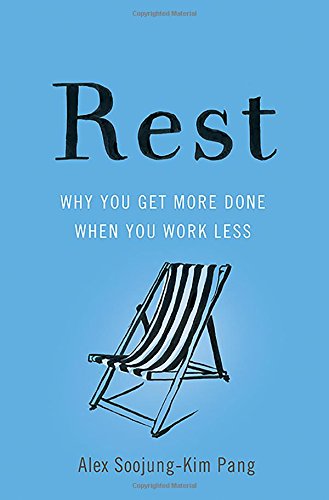
Cover of the book "Rest"

Book Review: “Rest” by Alex Soojung-Kim Pang

Rest
by Alex Soojung-Kim Pang

A few months ago I had the pleasure of reading “Rest: Why You Get More Done When You Work Less” by Alex Soojung-Kim Pang. The core thesis of the book is that there is a limited amount of focused creative work that one can do each day, and that rest is an integral part of creative work. The book is a delight to read and (unlike many books in this genre) not overly long.

To prove his thesis, Pang relies on a combination of scientific studies relating rest and productivity as well as a collection of case studies of famous creative people including writers and scientists. As a scientist, I really appreciate that Pang correctly identifies scientific research as a fundamentally creative task, and seems especially fond of famous physicists.

The “resting” brain is not inactive. During rest the subconscious mind continues processing the ideas that the conscious mind was thinking about, but it does it in a different, freer way. This explains the often-reported phenomenon of getting your best ideas while you’re in the shower, or while out on a walk. Working more hours isn’t a guarantee of accomplishing more:

A survey of scientists’ working lives conducted in the early 1950s … graphed the number of hours faculty spent in the office against the number of articles they produced. … The data revealed an M-shaped curve. The curve rose steeply at first and peaked at between ten to twenty hours per week. The curve then turned downward. Scientists who spent twenty-five hours in the workplace were no more productive than those who spent five. Scientists working thirty-five hours a week were half as productive as their twenty-hours-a-week colleagues. From there, the curve rose again, but more modestly.

Across disciplines from science to writing to music, the limit for focused creative work seems to be 4-5 hours per day. A study of violin students at the Berlin Conservatory found that the best students weren’t those who practiced the most.

“Deliberate practice is an effortful activity that can be sustained only for a limited time each day.” Practice too little and you never become world-class. Practice too much, though, and you increase the odds of being struck down by injury, draining yourself mentally, or burning out. To succeed, students must “avoid exhaustion” and “limit practice to an amount from which they can completely recover on a daily or weekly basis.”

Pang also discusses the roles different kinds of breaks—detachment, deep play, sabbaticals—play in enhancing creativity. It’s worth noting that rest in this view need not be passive.

I’ve taken Pang’s message to heart and the results of my small uncontrolled study confirm his thesis. Over the past few months I have tried to make more time for rest. That has taken many forms. During the work day I make sure to take breaks for my mind to wander. Just a few minutes at a time, but it seems to help. I have also cut back on podcasts so I have more time with my thoughts. On the weekends, I find long bike rides very refreshing as a rare time where I am free from electronic distractions. As a result, I now feel more focused and present with the tasks that I am doing. I am spending a bit less time in the office, but I am getting much more science done.

2nd Annual Asia Pacific Workshop on Quantum Magnetism at ICTS

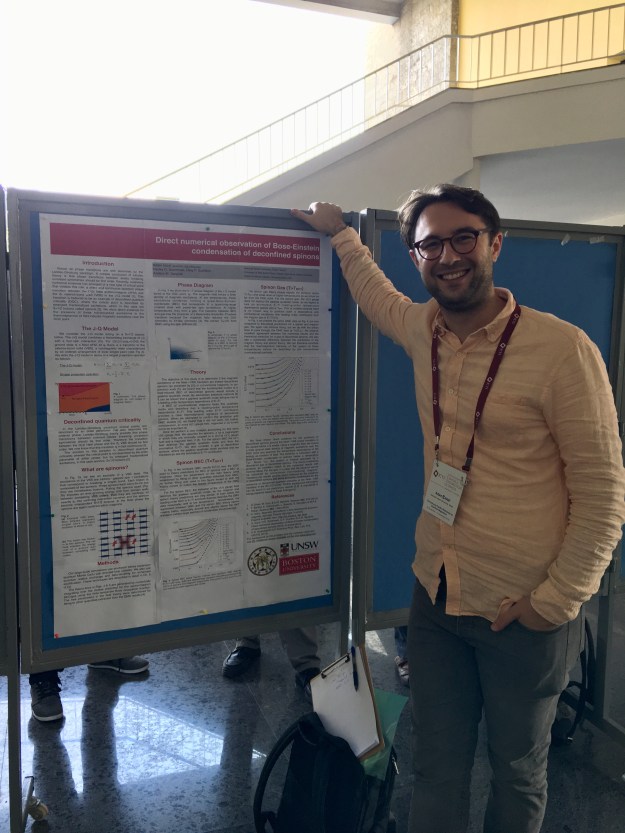
I present my poster. 

I’m back from almost two weeks of discussions on quantum magnetism at the International Centre for Theoretical Sciences (ICTS, a branch of TIFR). I presented a poster on my latest findings on my study of the field-induced spinons at the deconfined quantum critical point and received some useful feedback that will help me put the finishing touches on the manuscript.

In addition to some great tutorials and research talks, I had some productive discussions with old collaborators, like Kedar Damle, and a chance to meet a number of new people in my field and talk physics. It was a really productive 8 days and I am now back in Taipei with renewed focus.

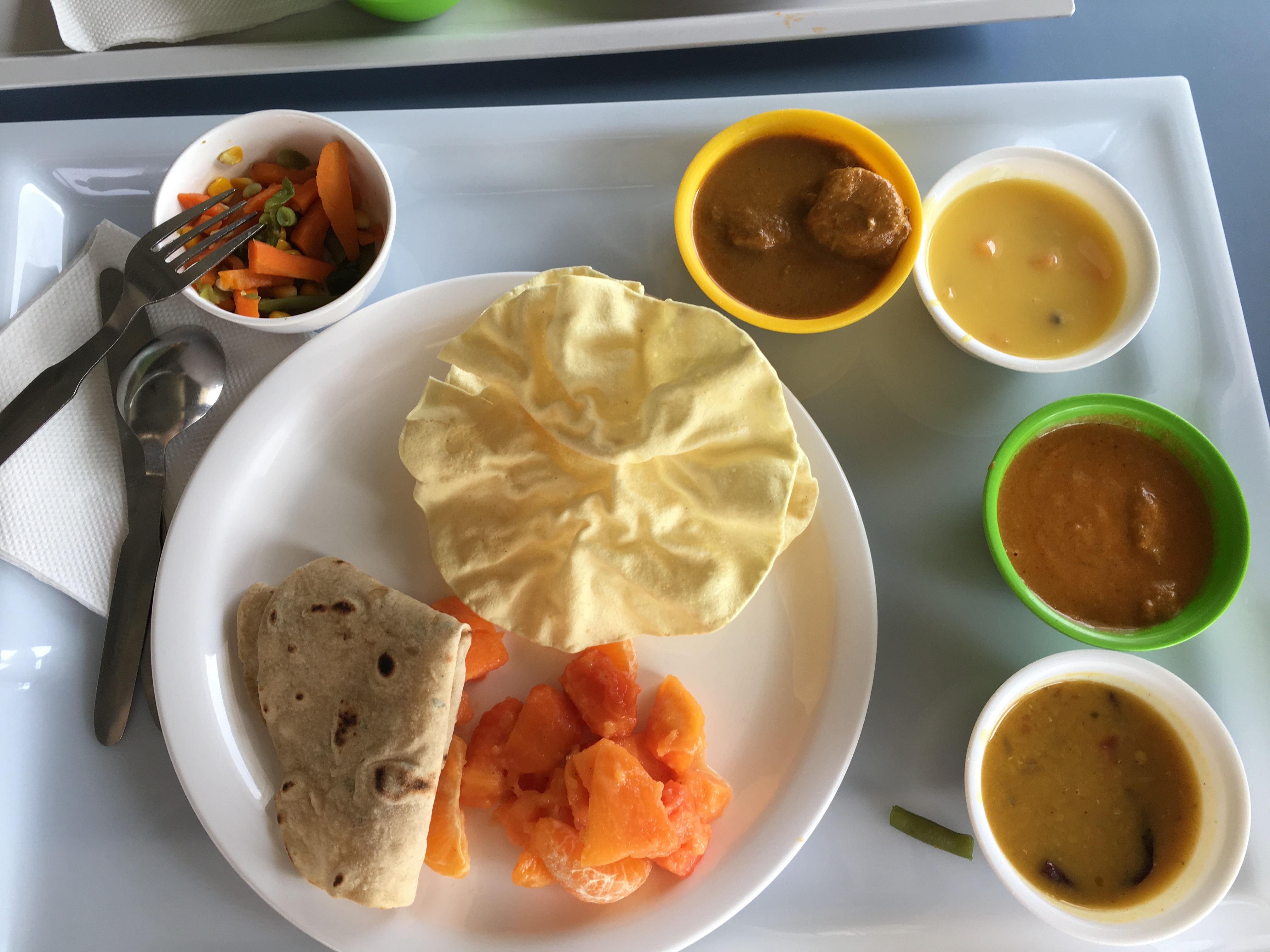
I couldn’t have nicer things to say about ICTS. Located an hour drive outside of Bengaluru, India, ICTS is essentially a little resort for physicists. Bengaluru is apparently blessed with perfect weather year-round, and ICTS makes the most of that weather with open-air courtyards and hallways. The campus is beautiful, modern, immaculately clean, and meticulously landscaped. The guest house was basically a hotel, and the cafeteria serves up delicious Indian cuisine.  My thanks to the organizers (Subhro Bhattacharjee, Gang Chen, Zenji Hiroi, Ying-Jer Kao, SungBin Lee, Arnab Sen and Nic Shannon) as well as the ICTS staff who did such an excellent job with all the logistics. I hope to be back again for another workshop soon.


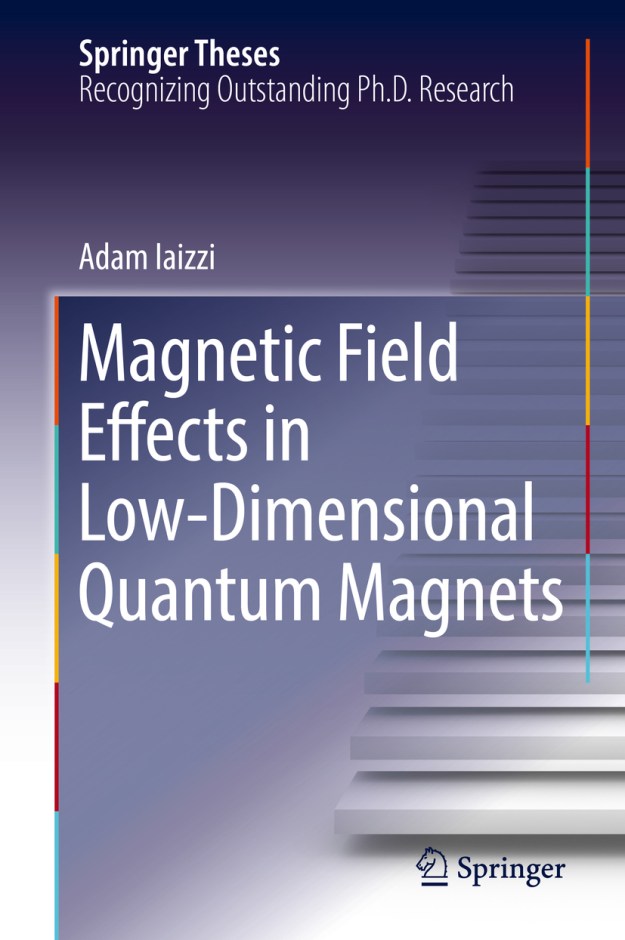
My dissertation is now available online from Springer!

The cover of my dissertation as published by Springer

Earlier this year David Campbell nominated my dissertation for a Springer Thesis Award. I’m proud to say that my dissertation won and it is now available from Springer. My dissertation covers almost all of the research I did during my PhD, focusing on magnetic field effects on quantum antiferromagnets, specifically metamagnetism and deconfined quantum criticality. I’m especially proud of my introduction (Ch. 1), which I tried to make accessible to a relatively broad audience, and my methods chapter (Ch. 5), a detailed pedagogical guide to the numerical methods I used in my work.

In Chapter 1 I describe the historical and scientific context for both the study I have undertaken and the methods I have used to do it. In doing so, I tell the story of Dr. Arianna Wright Rosenbluth, the woman physicist who wrote the first-ever modern Monte Carlo algorithm in 1953. To my knowledge this is the most complete account of her life ever published.

Chapter 2 is a lightly edited version of my 2017 Phys. Rev. B paper on metamagnetism and zero-scale-factor universality in the 1D J-Q model. In Chapter 3 I discuss these same features in the 2D J-Q model. Most of Chapter 3 has been published in my 2018 Phys. Rev. B paper, but the Springer version includes an additional analysis where we look at an alternative form of the logarithmic corrections to the zero-scale-factor universality based on the 4D Ising universality.

In Chapter 4 I study the deconfined quantum critical point separating the Néel and VBS phases in the 2D J-Q model. Using a field, I force a nonzero density of magnetic excitations and show that their thermodynamic behavior is consistent with deconfined spinons (the fractional excitations predicted by deconfined quantum criticality). I also discuss a field-induced BKT transition and non-monotonic temperature dependence of magnetization, a little-known feature of this type of transition.

Finally, in Chapter 5  I provide a detailed pedagogical description of my methods focusing on stochastic series expansion quantum Monte Carlo and extensions thereof. Little in this chapter is my invention, but many of the details of these techniques have not been described in detail anywhere else in the literature (another resource is Sandvik’s excellent review article).

If you’re interested in using my dissertation, please let me know and I can send you a PDF!


Off to Bengaluru!

Tomorrow I’m getting on a plane to Bengaluru, India for the 2nd Asia Pacific Workshop on Quantum Magnetism at ICTS Bangalore. I’m looking forward to nine straight days of tutorials and research talks. I’ll also present my poster on my work with Harley Scammell and Oleg Sushkov on direct detection of deconfined spinons, the feedback should be very helpful in finalizing our manuscript on this topic. India  (Mumbai) was the location of my first major research trip, I’m eager to complete that loop and see Bengaluru!

The death of Le Grand K

Last Friday, the 26th General Conference on Weights and Measures voted to replace “Le Grand K”, the 129 year old physical prototype of the kilogram, with a new measure based on physical constants. The new definition, which comes in to force next spring, is now fixed by defining the Plank constant as exactly 6.626 070 15 x 10-34 Joule seconds. 

The kilogram was the last SI unit based on a physical prototype (which means that until next year, Le Grand K is, by definition, exactly one kilogram). Other prototypes, such as the physical meter, have been long since retired. This redefinition is a triumph of high-precision experimental physics. The problem with physical prototypes for units is that they can change. Le Grand K, for example, has been losing mass, to the tune of about 50 micrograms (5 parts in 100 million), possibly because the identical cylinders it is compared to have gotten dirty from being handled more often.

Farewell Le Grand K! Thank you for your service!

Keeping up with science policy

If you have three minutes every month to devote to keeping up with science policy, I highly recommend subscribing to APS’s Signal Boost. Signal Boost is a monthly video update about key developments in science policy. Among other things, they provide critical information on the budgeting process for science funding in the House and Senate along with how to contact your elected officials about each issue. Scientists are a small group, so we need to speak up to be heard.

This month: appropriations and a bill to fight harassment in STEM: